The Rise of the Picture Window
The picture window turned a broad view into part of a room’s design. See how its changing role reshaped domestic architecture and everyday life.
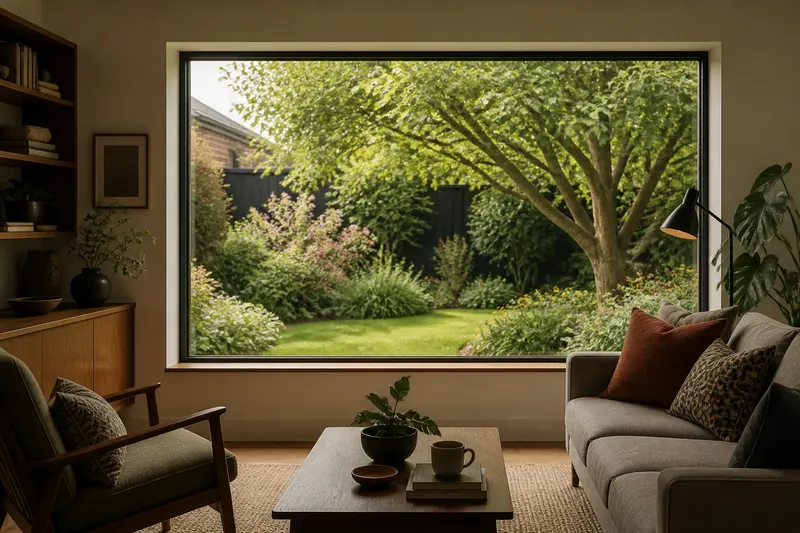
Why did the picture window become such a familiar feature of domestic architecture? Its appeal lies in a simple shift: instead of dividing a view into small panes, the window presents a broad, relatively uninterrupted scene as part of the room. The picture window’s rise was not just a story of larger glass. It changed how people composed interiors, related houses to their surroundings and understood a window as a design feature in its own right.
The picture window made the view part of the room
A traditional window often announces its construction. Muntins divide the glass into smaller lights; shutters or deep reveals give the opening a strong edge. A picture window takes a different approach. Its broad pane reduces visual interruptions, allowing a garden, tree canopy, hillside or street scene to read almost like a framed image.
That comparison explains the name, but it can also make the design sound more passive than it is. A painting is chosen and hung; a picture window selects a view through the placement, height and scale of an opening. The view changes with the weather, the season and the movement of people outside. The window therefore frames something alive rather than a fixed composition.
Inside, a broad pane can make a wall feel less like a boundary and more like a viewing surface. It can establish the direction in which a room faces, draw attention to a particular landscape feature and make the arrangement of furniture respond to the outside. The window is not simply an opening to look through; it becomes one of the room’s organising elements.
Changing glass and building methods made broad panes more practical
The picture window’s emergence depended on changes in glassmaking and construction, not on a sudden change in taste alone. Larger panes became more attainable as manufacturing methods improved. At the same time, building systems and frames evolved to accommodate openings that could not be handled as a collection of small, separately framed lights.
Older window patterns had practical and visual logic. Smaller panes suited the available glass and could be replaced individually. Their frames also contributed to the character of a building. As larger sheets of glass became easier to use, designers gained another option: make the glass itself a major surface, with a simpler frame around it.
That option did not erase older window types. It joined them. A house could combine a picture window with smaller opening windows, allowing a broad view in one part of the façade and ventilation or a more traditional pattern elsewhere. This mixture became an important part of the type’s appeal: a room could have the visual openness of fixed glass without requiring every window to be one large, immovable pane.
In domestic architecture, the larger opening also changed the relationship between wall and window. A small window sits within a wall that remains visually dominant. A picture window can make the wall seem to recede, particularly when the frame is restrained and the view beyond is clear. That effect suited designs interested in open plans, connected living spaces and a closer visual relationship with the garden.
Post-war homes gave the picture window a new domestic role
As modern architectural ideas entered ordinary house design, a broad pane came to suggest openness, informality and a close connection to the outdoors. The picture window was well suited to a living room facing a lawn or a dining area with a view of a courtyard. It could bring the landscape into the centre of domestic life without requiring a person to step outside.
Its spread was also helped by its flexibility as an image of home. In one house, the window might frame a stand of trees; in another, it might look onto a compact suburban garden. The design idea travelled even when the setting changed. A wide pane offered a promise of space and outlook, although the actual view depended on the site and the way the room was planned.
The feature could also help distinguish the principal living space from other rooms. A large window facing the garden gave a sitting room a clear focal point, while bedrooms and service areas could retain smaller openings. This hierarchy made the picture window more than a repeated façade pattern: it signalled which room was intended for gathering, looking out and spending time.
Imagine a modest house where the sitting room faces a plain fence and a neighbouring wall. If its owner replaces a small window with a broad fixed pane, the room may feel more open, but the view will still be limited. If the opening instead frames a mature tree at the edge of the garden, the same design can make that tree feel like a feature of the room. The starting point, the change and the expected result are all visible in the relationship between the glass and what lies beyond it.
Designers learned that a wide view needs careful framing
A picture window works best when its scale and position suit the scene. A low sill can connect a seated person to a garden; a higher opening may capture tree branches or sky. A broad pane facing a blank boundary can make that boundary harder to ignore, while a carefully positioned one can make an ordinary view feel composed.
The frame matters, even when the intention is to make it disappear. Its colour, depth and divisions affect how the eye meets the view. A heavy frame can give the opening a solid outline; a slimmer one can make the glass seem more continuous. Where a picture window is paired with operable side windows, the difference between fixed and moving sections becomes part of the composition.
There are trade-offs as well. A large pane can admit abundant daylight, but it can also make glare more noticeable or expose occupants to views from outside. Curtains, blinds, planting and the orientation of furniture may all affect how comfortable the window feels in daily use. The design question is not simply how much glass a room can hold, but how the opening behaves at different times of day and in different kinds of weather.
What is not worth the effort is treating the broadest possible pane as automatically the best one. Enlarging glass without considering the view, privacy and the room’s use can produce a dramatic opening that is awkward to live with. A well-framed modest outlook can be more satisfying than a larger window with no clear purpose.
The picture window changed as domestic priorities changed
Over time, the picture window’s meaning has shifted. It once carried an especially strong association with modern living and a relaxed connection to the outdoors. Today, it can be read as a familiar domestic feature, a design statement or simply one part of a mixed window arrangement.
That changing status reflects a broader change in how houses are judged. A window is not only an architectural shape seen from the street; it affects light, privacy, comfort and the daily view from a chair or table. The picture window made those interior experiences visible on the exterior, where a broad pane could announce the life of the room behind it.
It also exposed a tension between openness and shelter. A wide view can make a room feel generous, yet a house still needs places for retreat and privacy. Designers and residents have answered that tension in different ways, using curtains, projecting eaves, landscaping or combinations of fixed and opening windows. The picture window did not settle the question; it made the question harder to ignore.
What do people ask about picture windows?
What makes a window a picture window?
A picture window is generally a large window designed chiefly to frame a view, often with a fixed central pane. It may sit beside smaller windows that open for ventilation, so the whole assembly combines a broad outlook with practical use.
Why did picture windows become popular in houses?
Improved access to larger panes made broad openings more feasible, while changing domestic design placed greater emphasis on open living spaces and views of gardens or landscapes. The window offered a clear visual link between a main room and its surroundings.
How is a picture window different from a bay window?
A picture window is defined by its broad pane and view-framing role, and it may sit flush with the wall. A bay window projects outward from the façade, creating an angled or curved enclosure and often adding interior space along with a wider view.
Can a picture window open?
The central picture pane is commonly fixed, but some designs place opening casement or awning windows beside it. The arrangement depends on the window system and the needs of the room.
A picture window is a decision about what deserves attention
The lasting appeal of the picture window comes from its ability to give a view a deliberate place in the house. It can make a tree, a garden or a changing sky feel connected to everyday routines, while also shaping how a room is furnished and experienced. Its history is therefore not just about larger panes, but about domestic architecture learning to treat the outlook as part of the interior.
When considering a picture window, start by looking from the spot where people will actually sit or gather. Notice what the opening would frame, what it would reveal to passers-by and how the view changes as you move through the room. That simple act of looking helps explain why the picture window endures: its most important material is not glass, but the view the glass gives a room a reason to notice.